
Greeters Are More Than Hospitality — They Are the First Layer of Awareness

When churches think about safety ministry, the focus usually stays on the people officially assigned to safety and security. That focus makes sense, but it also creates a blind spot. Some of the most important observations in any church happen before a safety ministry member ever makes contact, and they happen at the door.
The first ministry people meet at the door is also the first layer of awareness.
That is why churches need to stop viewing greeters as hospitality only.
A greeter stands at the point where welcome and awareness meet. That does not mean greeters should be treated like security personnel. It does not mean they should interrogate people, confront problems on their own, or step into situations that require a higher level of training. Greeters should still be greeters. They should be approachable, calm, and welcoming. In many ways, that is exactly what makes them so effective. They are able to engage naturally without immediately creating tension. They are able to observe without making the interaction feel hostile. That matters.
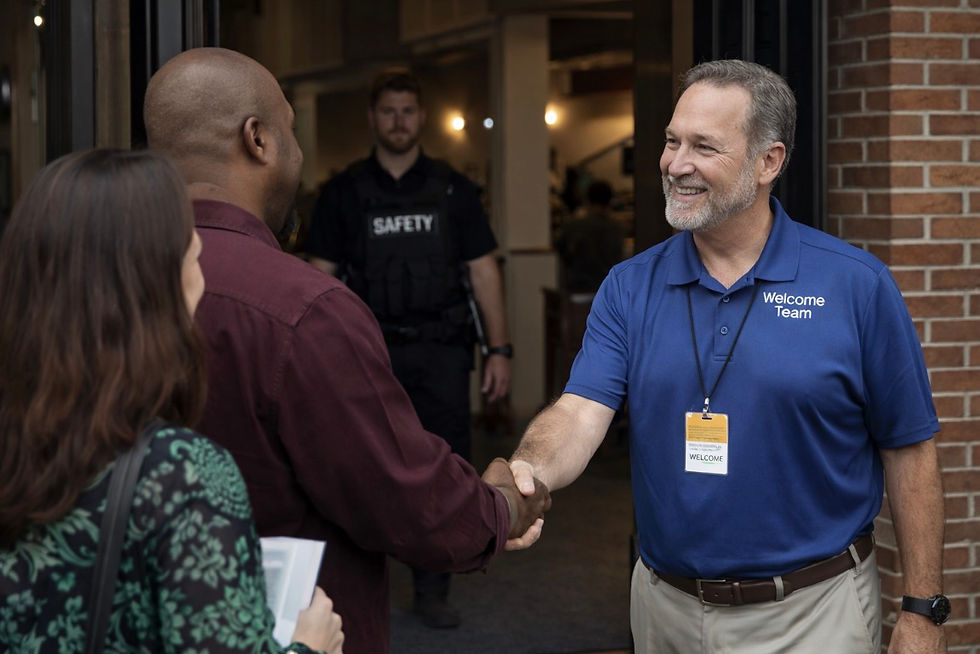
At the same time, churches need to recognize that greeters are in one of the best positions in the building to notice warning signs early. That is why greeters should be taught basic situational awareness.
They do not need extensive tactical training to be useful. They do need to know how to recognize when something seems off. In many cases, body language is one of the clearest indicators. A person’s posture, facial expression, level of tension, eye movement, pacing, agitation, or unusual scanning behavior can communicate a great deal before much is ever said. Sometimes behavior says more than appearance. Sometimes silence says more than words.
Greeters should also understand how to notice the full presentation of a person without turning awareness into unfair judgment. Clothing, tattoos, and outward appearance can sometimes serve as initial indicators that a person may require a little more attention, but they should never be treated as the sole reason to label someone a threat. That distinction matters. Appearance alone is not enough. But in some situations, it may be enough to prompt a greeter to spend a little more time in friendly conversation, observe more carefully, and quietly make the safety ministry aware.
The point is not to judge people by appearance. The point is to understand that certain details may justify greater awareness when they are combined with body language, conduct, or other behavioral indicators.
That is where many churches miss the value of the greeter role. A well-trained greeter is not just welcoming people into the building. A well-trained greeter is also helping the church assess what is entering the building. That supports both safety and hospitality at the same time.
In some ways, greeters have a more difficult job than people realize. Safety ministry members may ultimately be the ones who handle a situation, but greeters are often the ones standing closest to the initial contact. They are expected to be warm, observant, approachable, and composed all at once. They have to notice details without becoming accusatory. They have to engage naturally without becoming naïve. They have to recognize when something deserves more attention, while still maintaining the kind of presence that makes people feel welcomed.

That is not a minor role. It is a meaningful one.
This is also why communication can you move your water for a minute? It’ll be fine. People will see it. I am not while you’re in the car
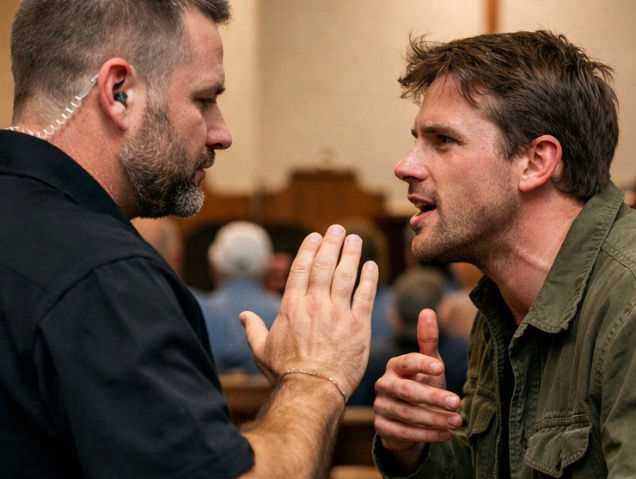
Are we gonna complain the whole time? No, we don’t have time to go change your pants between greeters and the safety ministry matters so much. If a greeter notices something that raises concern, the goal should not be to panic or take unnecessary control of the situation. The role of the greeter is to engage politely, remain aware, and, as soon as reasonably possible, get the attention of a safety ministry member. That allows the safety ministry to pick up on the situation, assess it further, and determine the best course of action.
That kind of coordination closes gaps. When churches fail to make that connection, they create unnecessary blind spots. The people who are most visible and most approachable are left disconnected from the people officially responsible for safety. That is a mistake. The greeting team and the safety ministry should not operate as though they are unrelated. They serve different functions, but those functions should support one another.
Every church should have a formal safety ministry, even if it is small. Even a small church should have at least a few people who are intentionally responsible for safety. In very small churches, one person may need to serve in more than one capacity, and a safety ministry member may also fill a greeting role when necessary. Even then, there should still be structure. At minimum, a church should aim to have at least two safety ministry personnel and at least one greeter. The smaller the church, the more important it becomes to be intentional with the people available.
Churches do not need a complicated system to improve this. The starting point is straightforward. Train greeters in basic situational awareness. Teach them what kinds of warning signs to pay attention to. Teach them how to look at the totality of a person rather than fixating on a single detail. Teach them how to engage warmly while remaining alert. And teach them how to communicate concerns discreetly to the safety ministry.
That kind of training does not turn greeters into security. It makes them more effective in the role they already have.
Church leaders need to recognize that greeters are not just part of the welcome process. They are one of the first layers of awareness the church has. When that role is understood correctly, the church becomes better equipped to identify concerns early, respond wisely, and maintain an environment that is both welcoming and secure.
Many churches are underutilizing a valuable tool simply because they have never stopped to think about greeters this way. That needs to change.
Because the people standing at the front door are doing more than welcoming others into the church. At their best, they are helping the church remain aware, prepared, and better positioned to protect its people with wisdom.
If a church wants to strengthen its safety ministry, it should start by taking a harder look at the people already serving at the entrance.
They are not “just greeters.”
They are the first layer of awareness.

Comments