
Who Belongs on a Church Security Team — and Who Should Serve Somewhere Else
- churchpeacekeeper

- Nov 11, 2025
- 4 min read
Church security is one of those responsibilities that sits at the uncomfortable intersection of faith, community service, and real-world risk management. It’s noble, necessary for many congregations, and — when done poorly — dangerous for everyone involved. This is my opinion, informed by public research and hard facts: some people are temperamentally and practically suited to this role; others should honor the church by serving in ways that play to their strengths and protect the congregation.
The Reality Churches Face
While violence in houses of worship remains rare, when it happens, it’s swift and devastating. The FBI reports that police typically arrive at active-shooter scenes in about three minutes — lightning-fast by law-enforcement standards, yet an eternity when seconds count.
A multi-year analysis by the AMARK Foundation found that shootings made up roughly 40 percent of all recorded attacks on houses of worship but caused 94 percent of the deaths. That means when violence reaches a church, it is almost always sudden and severe.
Government guidance, such as the Department of Homeland Security’s Mitigating Attacks on Houses of Worship report, repeatedly stresses that well-trained, disciplined volunteers save lives — not lone heroes. Effective programs rely on preparation, coordination, and calm execution, not adrenaline.

The People Who Fit the Role
1. The Calm and Collected
The best security volunteers stay clear-headed when others freeze. FBI behavioral studies show that casualties mount fastest in the first moments of chaos. A cool-tempered person who can act decisively is often the line between safety and tragedy.
2. The Lifelong Learners
Security is an ongoing discipline, not a one-day seminar. CISA’s security guidance calls preparedness “a process, not a plan on a shelf.” The right people are those who welcome continuing drills, first-aid refreshers, and communication exercises.
3. The Humble Servants
The proper heart for church security is service, not swagger. Jesus said, “Whoever wants to become great among you must be your servant.” The best team members quietly protect without seeking recognition.
4. The Communicators
Clear, steady communication saves lives. Good volunteers can direct crowds, call 911 with concise information, and reassure families in panic. A calm voice is often more powerful than a raised weapon.
5. The Legally and Ethically Grounded
Churches have faced lawsuits when under-trained volunteers overstepped legal boundaries. A qualified team member understands local use-of-force laws, respects reporting procedures, and submits to oversight.
6. The Medically Prepared
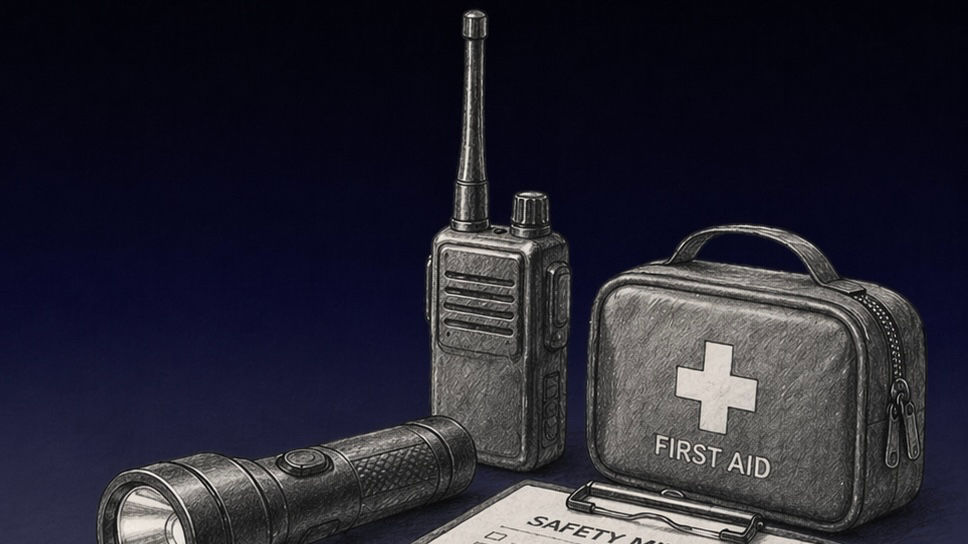
Emergency-care training turns protectors into life-savers. Studies in Prehospital Emergency Care show that bleeding control within the first five minutes dramatically improves survival. A volunteer who can apply pressure or a tourniquet until EMS arrives is priceless.
Those Who Should Serve Elsewhere
1. The Adrenaline Seeker
Some crave the thrill or authority of the role. But true security work is 99 percent vigilance and 1 percent response. Those looking for excitement often manufacture it — a danger to everyone.
2. The Unhealed or Traumatized
People wrestling with untreated trauma or PTSD deserve compassion, not confrontation. Loud noises, arguments, or crowds can trigger flashbacks and unsafe reactions.
3. The Unaccountable
Anyone unwilling to undergo background checks, attend training, or follow chain-of-command protocols doesn’t belong on the team. Every credible safety manual states that discipline and documentation are the foundation of protection.
4. The Unreliable or Impaired
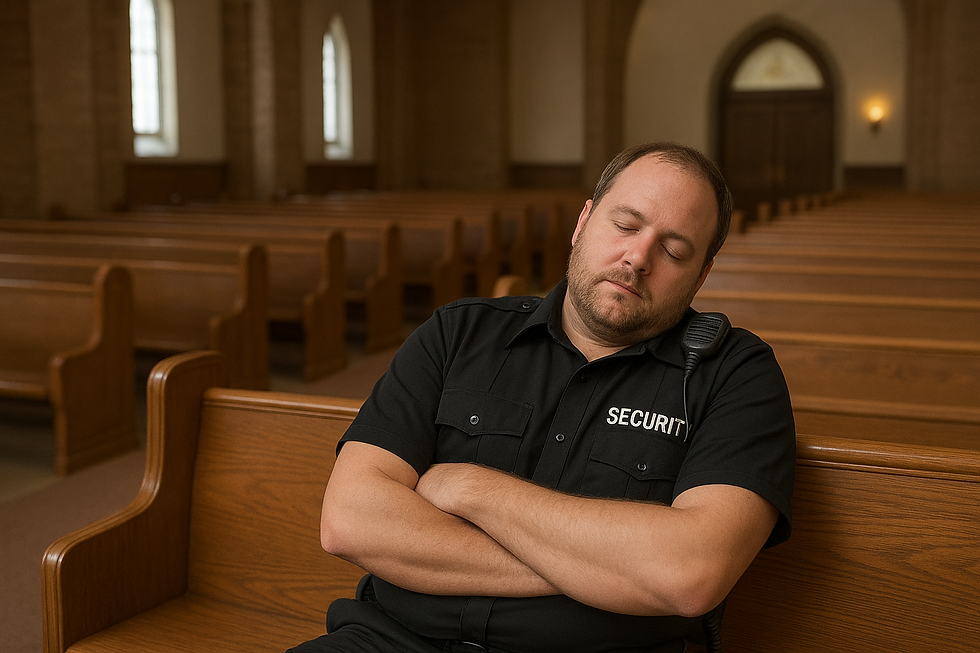
Tardiness, distraction, or substance use can undo months of planning. Security demands reliability and full alertness.
5. The Unfit or Unqualified
Physical limitations or legal disqualifications are not moral failings, but they do matter. Honest self-assessment is an act of love for the congregation.
A Broader View of Service
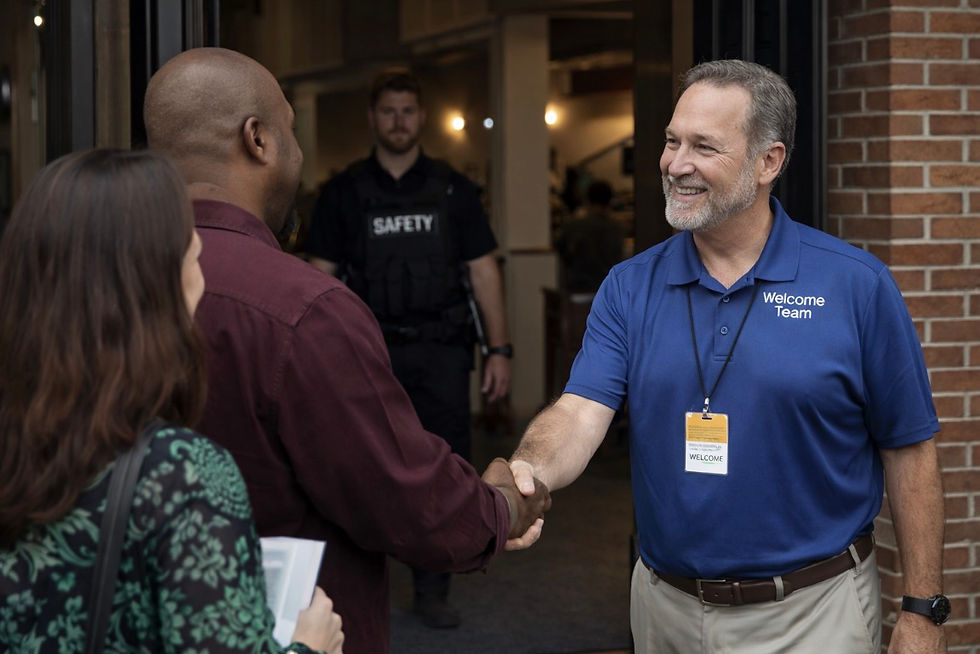
Security is not the only way to safeguard a church. Greeters who recognize faces provide the first line of awareness. Ushers who monitor exits prevent panic during emergencies. Members trained in CPR and first aid extend the safety net. Every believer has a role; only some are called to stand on the front line.
What Church Leaders Can Do Now
Screen and Train. Require background checks, first-aid certification, and regular drills.
Define Roles Clearly. Separate “security” from “safety support” roles such as ushers or medical responders.
Rehearse the First Ten Minutes. Those minutes before police arrive are critical — train for them.
Emphasize De-escalation. Most disruptions involve emotional distress, not weapons. Teach calm conversation.
Provide Pastoral Support. Security work is heavy; team members need spiritual and emotional care, too.
“Church security is not about weapons or control — it’s about shepherding. The true protector guards with both hands: one steady, one compassionate.”
Final Thoughts
The right people for church security blend courage with humility. They are calm, communicative, and committed to serving rather than showing off. Those who aren’t suited for tactical duty often shine brightest elsewhere — greeting, teaching, praying, or organizing.
As the apostle Paul reminded us, “The body is not made up of one part but of many.” When each believer serves where they’re strongest, the entire church becomes safer, steadier, and more faithful to its mission.

Comments